
Why a 2-Stage Furnace Overheats on High Fire (Real Mission Viejo Tune-Up)
On a Mission Viejo tune-up we found a 2-stage furnace with stage 2 disconnected to stop overheating. The real cause: a clogged evaporator coil.

On a recent furnace tune-up in Mission Viejo, we opened up a 2-stage gas furnace that had a history of overheating. Someone had dealt with the problem by disconnecting the furnace’s second stage instead of finding out why it was overheating. When we inspected the system, we found the real cause: a clogged evaporator coil that was choking airflow whenever the furnace ran on high fire.
What we found on this Mission Viejo tune-up
Furnace: American Standard TUD2C120A9542AA, a 2-stage gas furnace with 120,000 BTU input, manufactured in 2007.
Evaporator coil: TES0460C215B2705AP, an R-22 coil with a TXV (thermostatic expansion valve).
The workaround: the second-stage pressure switch wire had been disconnected, so the furnace could no longer move up to high fire. That stopped the overheating on stage 2, but it did not fix the reason for it.
The cause: the evaporator coil was clogged. On a furnace paired with central AC, the indoor coil sits on the furnace’s supply side, so every bit of heated air has to pass through it. A dirty coil restricted airflow on second stage, and that restriction is what made the furnace overheat.
The coil is an R-22 coil, a refrigerant that has been phased out. Systems built for R-22 are not designed for today’s refrigerants, so when the AC side of a system like this is eventually replaced, the coil is typically replaced along with it. You can see what that looks like in our R-22 to R-454B AC replacement in Coto de Caza.
How a 2-stage furnace works, and why high fire needs more airflow
A single-stage furnace has one setting: full fire. A 2-stage furnace has two. On most days it runs on low fire, a reduced gas rate that keeps the house comfortable with quieter, longer and more even heating cycles. When the house needs more heat, on a cold morning or after a big setback on the thermostat, it switches to high fire and burns gas at its full rated input.
More fire means more heat inside the furnace, and that heat has to be carried away by air. That is why the blower speeds up on high fire. The furnace is designed to move a certain amount of air across the heat exchanger for each stage. On low fire, a partly restricted system may still get by. On high fire, the same restriction leaves the extra heat with nowhere to go.
Why restricted airflow makes a furnace overheat
Three parts of the furnace tell the story:
The heat exchanger. This is the metal chamber that separates the burner flames and exhaust gases from the air that goes to your rooms. Air flowing over it picks up heat. When less air flows, the metal runs hotter.
Temperature rise. This is the difference between the air coming back into the furnace and the air leaving it. Every furnace has an approved temperature rise range printed on its rating plate. Low airflow pushes the rise above that range.
The high-limit switch. This safety switch watches the temperature inside the furnace. When it gets too hot, the switch opens and shuts off the burners while the blower keeps running to cool things down. Then the furnace tries again. A furnace “tripping on high limit” over and over is one of the clearest signs of an airflow problem.
Safety note: repeated overheating stresses the heat exchanger. Over time, constant heating and cooling past its design limits can contribute to cracks, and a cracked heat exchanger can let exhaust gases, including carbon monoxide, into the air you breathe. Keep working carbon monoxide alarms in your home, and if your furnace keeps shutting off on high limit, have it checked rather than living with it.
Why disconnecting stage 2 is a band-aid
Taking second stage out of the picture hides the symptom. The furnace stops reaching the heat level where the restriction becomes obvious, but the restriction is still there:
The coil keeps loading up with dirt, and airflow keeps dropping, so low fire can eventually start to overheat too.
The furnace loses the capacity it was designed to have, so on the coldest days it may run longer and still struggle to keep up.
The same clogged coil hurts your air conditioner in summer. A restricted coil can lead to poor cooling and even a frozen coil.
A safety control’s job is to report a problem. Working around the problem instead of solving it leaves the heat exchanger under stress.
The fix is to restore airflow: find the restriction, whether it is a dirty coil, a clogged filter, a blocked return or a duct issue, and correct it so the furnace can run on both stages as designed. That is what our furnace repair technicians look for.
Signs of restricted airflow
The furnace starts heating, then shuts its burners off while the blower keeps running, and repeats.
Weak airflow from the vents, especially when the furnace is working hardest.
Some rooms stay cold while the furnace seems to run constantly.
A hot or dusty smell, or a furnace cabinet that feels unusually hot.
A filter that is visibly dirty or a return grille that whistles.
In summer, poor cooling or ice on the refrigerant lines or indoor coil.
If your furnace is blowing cold air between cycles, an overheating shutdown is one of the possible causes.
How to prevent it
Change the air filter. Check it monthly and replace it every 1–3 months, more often with pets or during heavy use. Never run the system without a filter, which lets dust build up on the coil.
Keep returns and vents clear. Furniture, rugs and closed registers all reduce airflow.
Schedule an annual furnace tune-up. A yearly visit, ideally in the fall, is the time to check temperature rise, safety controls and airflow before you need the heat. See what our furnace tune-up includes.
Ask for a coil inspection. The evaporator coil sits hidden inside its cabinet, so it is easy to forget. If your furnace runs hot or your AC struggles, ask us to check the coil.
Furnace overheating in Mission Viejo or nearby?
If your furnace keeps shutting off, someone has disconnected a stage, or it just doesn’t heat like it used to, GoTech Air Conditioning & Heating can find the cause. Our service call is $85, and you get the price before any work begins. We work 7:00 AM–7:00 PM, seven days a week, and emergency service is available.
Call (949) 228-6242 or book online.
More from the toolbox.
Practical advice, maintenance tips, and ideas from our team of local home service experts.
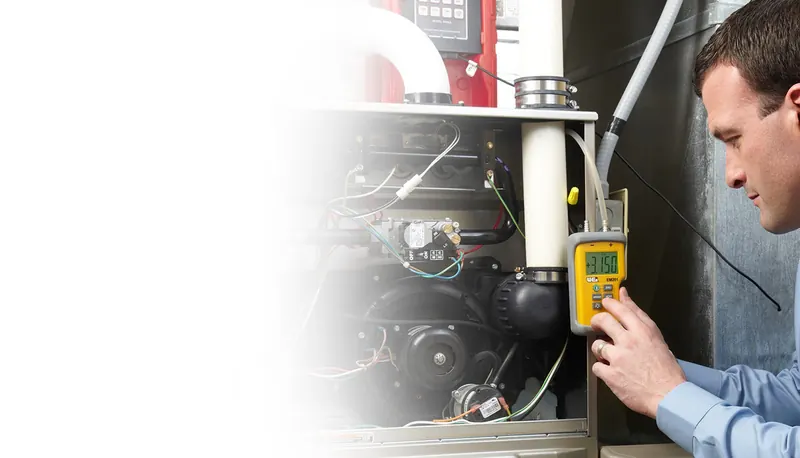
Furnace Blowing Cold Air? Causes, Fixes and When to Call
Furnace blowing cold air? Try safe fixes for settings, filters and airflow, learn the real causes, and know when to call for furnace repair in Orange County.
Read Article →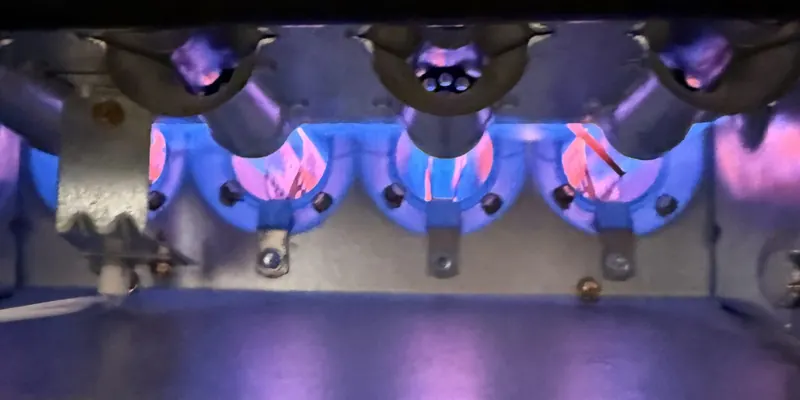
Common Heating Problems & How to Fix Them
Heater not blowing hot air? Learn the top heating problems — flame sensor issues, gas valve failures, blower problems. Call GoTech HVAC today.
Read Article →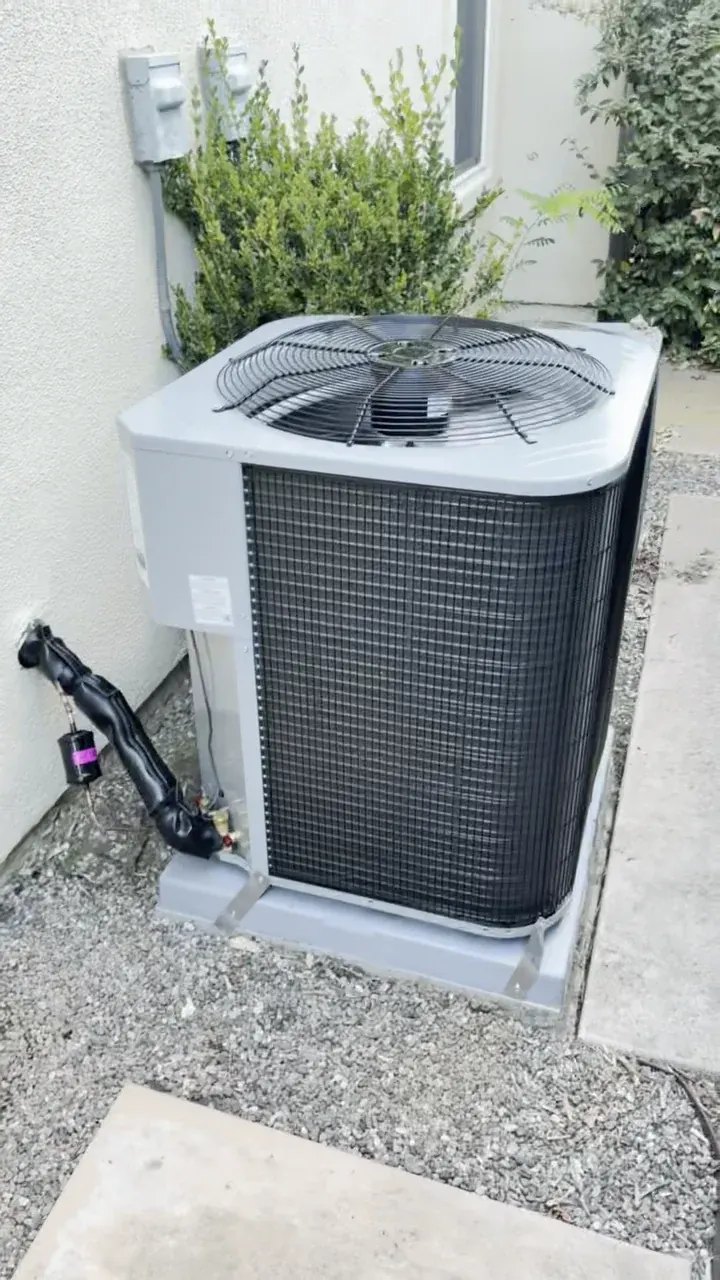
AC Replacement in Coto de Caza: From R-22 to R-454B
On November 9, 2026, GoTech Air Conditioning & Heating replaced a rusted, leaking R-22 outdoor AC unit in Coto de Caza with a new R-454B condenser.
Read Article →
Let’s get it done right.
From AC repair to new heat pump installs, GoTech HVAC is ready to help.
Licensed technicians · Upfront pricing · Same-day service